Travel · November 25, 2026
Watching French TV as a Visitor or New Resident
5 min
Abstract
French television is a quiet help when you arrive somewhere new. Here is what to expect from broadcast channels, hotel and rental sets, a first set-up at home and licensed internet TV, plus how to use it to pick up the language.
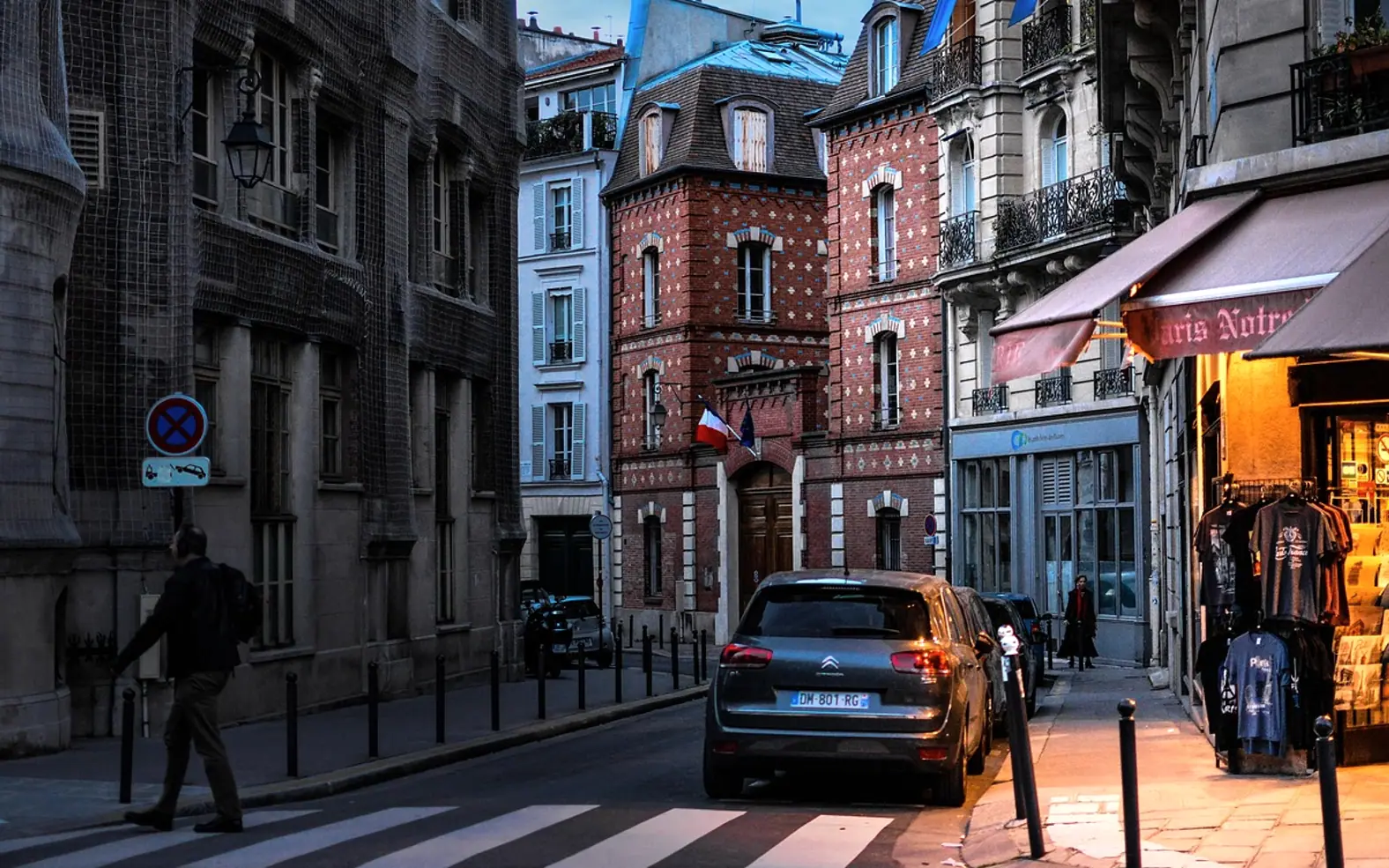
Watching French TV as a visitor or new resident is mostly a matter of knowing what the set in front of you can receive and how to change its language settings. A hotel or holiday rental usually gives you a fixed list of broadcast channels, often with a few international ones added. Once you have a home of your own, you choose how the picture arrives: through an aerial, through the box that comes with a broadband contract, or through a licensed internet TV service. Each route also gives you a daily dose of spoken French, which is worth more than it sounds when you are trying to settle in.
What broadcast television looks like in France
French broadcast TV covers the general mix you would expect in most European countries: national and regional news, weather, magazine programmes, game shows, documentaries, drama, films in the evening and live sport at weekends. Regional news slots are especially useful after a move, because they cover the roads, strikes, weather warnings and local events that national bulletins skip.
Two habits catch newcomers out. Evening schedules tend to start their main programme later than in some countries, and many foreign series and films are shown dubbed into French rather than subtitled. On most modern sets you can switch the audio track or turn on subtitles where the broadcaster provides them, which brings us to the remote control.
Hotel rooms and holiday rentals
Hotel televisions are often locked into a welcome screen or a hotel mode that limits the menus. Rental flats tend to have an ordinary household set with whatever the owner subscribes to. In both cases a few checks save frustration:
- Find the input. If the screen says "no signal", the set may be on the wrong source. Cycle through the inputs until a channel appears.
- Look for an audio or language button. It may be labelled with a speech bubble or found under the options menu while a programme plays.
- Read the house manual. Rental hosts often explain which remote controls the box and which controls the screen.
- Ask before you sign in. If the set has streaming apps, use only your own accounts and sign out before you leave.
Setting up TV in a new home
After a move, television sits on the same to-do list as electricity, broadband and insurance. Our guide on putting the steps of a move abroad in a sensible order places it where it belongs: after housing and paperwork, not before.
Check the equipment you brought
Sets bought in another region may not handle local broadcast standards, and plugs and voltage can differ too. If you are deciding what to pack, our explainer on how shipping household goods works covers why some appliances are better replaced locally. A recent set with a built-in tuner and a network connection gives you the most options.
Choose how the picture arrives
| Route | What you need | Things to check |
|---|---|---|
| Aerial | A roof or indoor aerial and a set with a suitable tuner | Whether the building has a shared aerial socket and how good reception is in your area |
| Broadband box | A broadband contract that includes a TV box | Contract length, what the TV part adds to the bill and whether the box needs a wired connection |
| Internet TV service | A stable connection and a compatible set, stick or set-top box | The provider's terms, licensing, the device list and how to cancel |
Renters should read the lease before drilling for an aerial or a wall bracket, since many landlords want to be asked first.
Licensed internet TV options
Many households now take their channels over the internet instead of an aerial. In practice this means an app on a smart TV, a streaming stick or a small box connected to the router. For a newcomer it has one clear advantage: it often works on a set you already own and can be moved with you if you change flats. A common route is one of the IPTV france services (internet-TV subscriptions aimed at viewers in France), which deliver channels through the broadband connection you already pay for.
Whichever route you take, choose a properly licensed service and read the provider's terms before you subscribe. Look at the contract length, the notice period, how many screens can be used at once and what happens to your account if you leave the country.
Using French TV to settle in and learn the language
Television is a patient teacher. It repeats the same formats every day, speaks at natural speed and shows you what people talk about. A few habits make it work harder for you:
- Start with the weather forecast. It is short, uses the same vocabulary daily and teaches you place names in your region.
- Move on to the news with French subtitles turned on, so you can match the sound to the written word.
- Watch a game show. The questions are clear, the answers are repeated and the numbers come up constantly.
- Keep a notebook of phrases you hear more than twice, then use them in shops and at the bakery.
- Rewatch a programme you already know in your own language, dubbed into French, so the story carries you when the words do not.
Do I need to pay anything just to own a TV in France?
Rules on broadcasting charges change from time to time, so check the current position with official sources when you arrive rather than relying on older advice from friends or forums.
Can I watch French TV in English?
Some programmes and films carry an original-language soundtrack you can select, but most daytime and news programming is in French only. Subtitles in French are more widely available than English ones.
Is it worth setting up TV straight away?
For a short stay, the hotel or rental set is usually enough. If you are staying for months, setting up a legal and simple option early gives you news, weather and steady language practice from your first week.
Television will not do the settling in for you, but it gives each evening a familiar shape in an unfamiliar place, and slowly the voices on screen start to make sense.